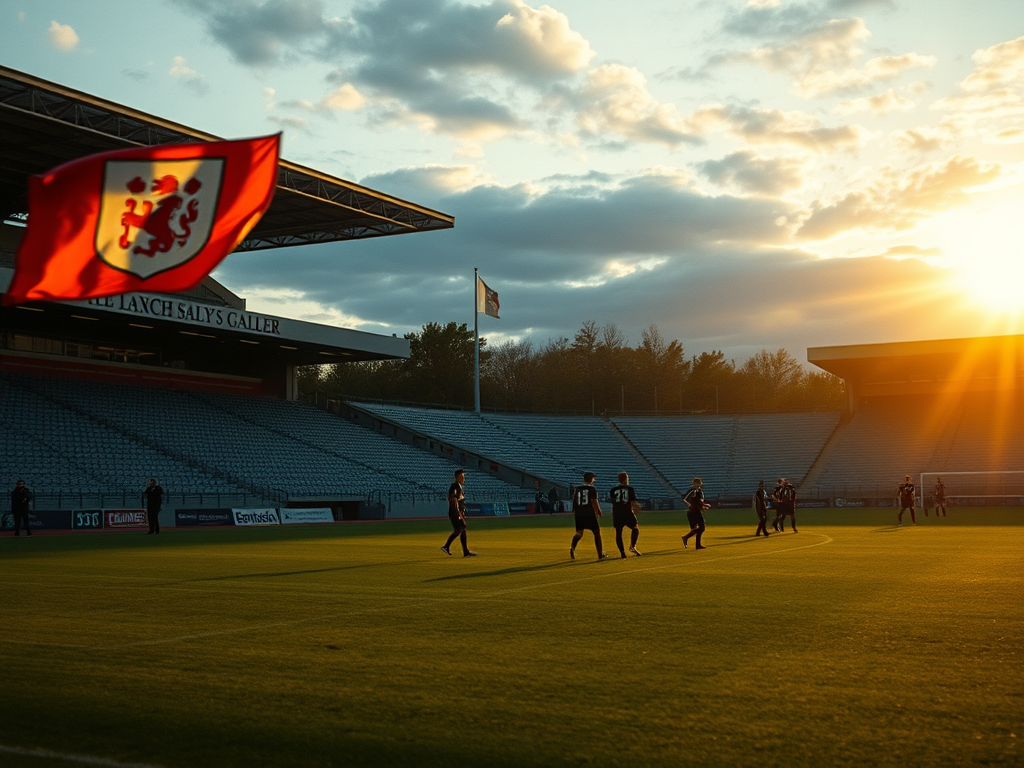
 Raith Rovers Hub
Recent Tactical Observations
In the latest fixtures, Raith Rovers have shown commendable resilience and determination, particularly in their midfield battles. However, while there have been flashes of brilliance, the team has struggled to maintain consistent attacking pressure, especially in away matches where they’ve often appeared cautious. The reliance on a single target man up front has led to predictability in offensive play, making it easier for opponents to anticipate and counteract their moves.
Midfield Dynamics
The midfield trio, while industrious, has occasionally lacked fluidity, leading to disjointed transitions from defense to attack. A key observation has been the tendency for the midfield to become congested, particularly when defending set pieces or during build-up play. This often results in limited passing options for the backline and can stifle creativity. To counteract this, introducing a more dynamic approach, perhaps utilizing a double pivot system, could allow for greater flexibility and creativity in the center of the pitch.
Suggested Tactical Adjustments
1. Formation Shift to 4-2-3-1: Transitioning from the current 4-4-2 formation to a 4-2-3-1 could provide additional support in attack while maintaining defensive stability. This would allow for two deeper midfielders to protect the back four and facilitate more fluid movement in the attacking third. With a more central attacking midfielder, Raith could exploit spaces between the lines, creating opportunities for the wide players to cut inside or link up with the striker.
2. Incorporating Width: The Rovers should also focus on utilizing the width of the pitch more effectively. By deploying wingers who are encouraged to stay wide, the team can stretch the opposition and create space for central players. This tactical tweak would not only aid in breaking down compact defenses but also provide better crossing opportunities for the striker.
3. Pressing Strategy: A more aggressive pressing strategy could be beneficial, particularly against teams that struggle with ball retention. By initiating a high press, Raith Rovers could regain possession in advanced areas and capitalize on defensive errors, especially in the opposition’s half. This would require coordinated movement and stamina from the forwards and midfielders, but it could significantly enhance the team’s goal-scoring opportunities.
Player Roles and Responsibilities
With these tactical adjustments, the roles of individual players must also be re-evaluated. For instance, the current role of the wingers could be altered to encourage more diagonal runs into the box rather than staying out wide. Additionally, the full-backs should be encouraged to overlap and provide support in attacking phases, which could help stretch the opposition's defense further.
Conclusion
As Raith Rovers continue their campaign in the Scottish Championship, these tactical tweaks could prove pivotal in optimizing their performance. By adjusting their formation, incorporating width, and enhancing their pressing strategy, the team can become more formidable opponents, ready to challenge for a playoff spot. With the right adjustments, The Rovers can transform their current form into a winning run that resonates throughout Stark's Park.